Welcome to the Department for Energy and Climate Change (DECC)'s Youth Advisory Panel (YAP)'s blog. The DECC YAP is a group of young people aged between 15 and 25 from all over the UK, with a wide-range of backgrounds, from academia to activism.

Our aim is to inform everyone and anyone about DECC's activities and likewise to help DECC understand and take into account the concerns of young people. We are a medium of consultancy and conversation. Much of our work looks at finding a 'Pathway to 2050', reviewing how energy with be supplied and used in the next four decades, so follow us and join us on the journey!

Friday, 10 June 2011

June Meeting: Carbon Capture and Storage

The new team outside DECC
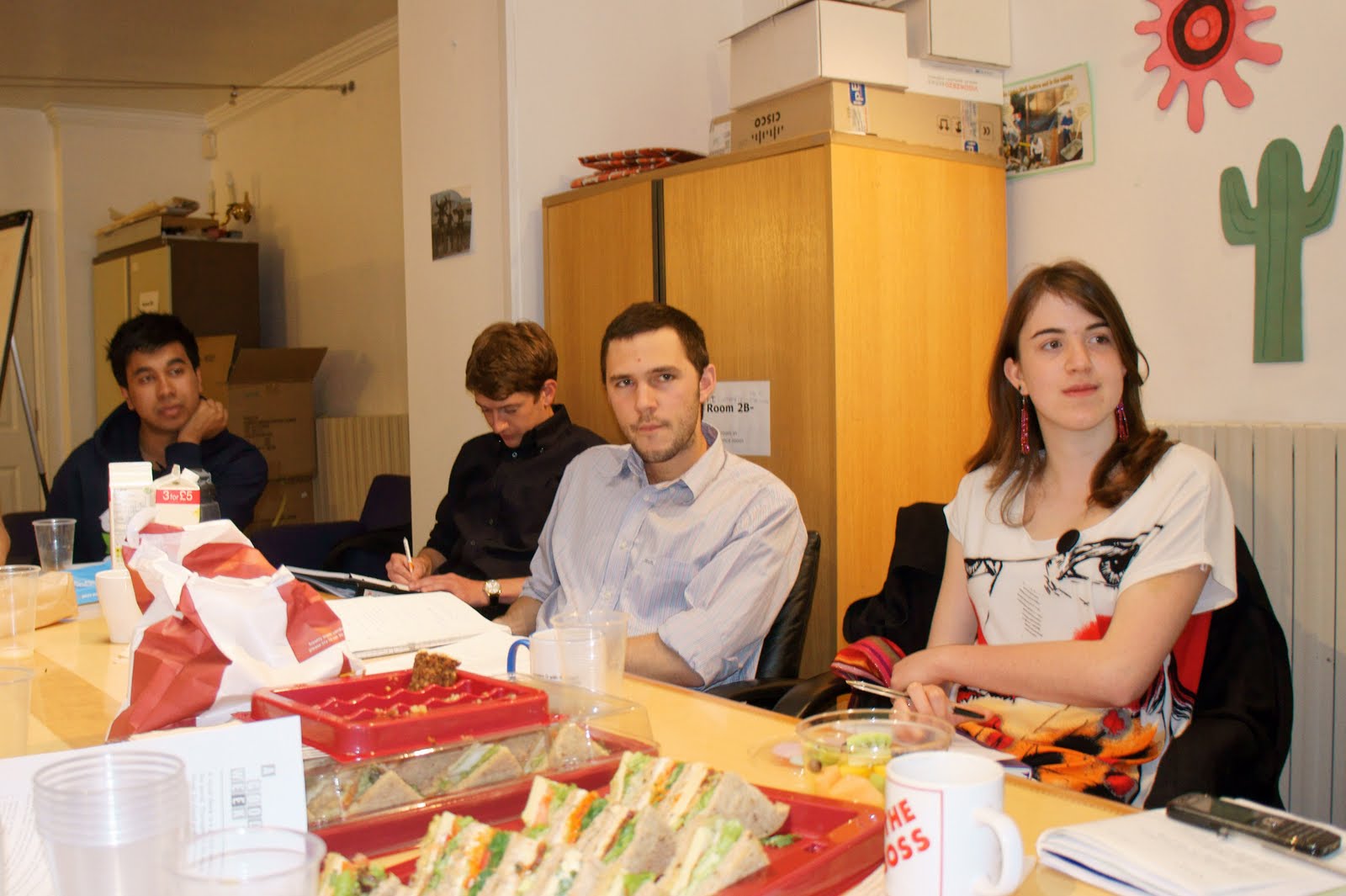
Last week was the second meeting of our re-launched panel, with still more new faces. We quickly learnt each other's names thanks to Rose's hilarious 'burger & fries' ice breaker. After whizzing through administrative discussions, we split into 5 groups to discuss what we want to achieve this year relating to our 5 themes - SMART meters, Carbon capture and storage (CCS), Land-based renewables, Consumer perceptions and Women in energy.

Below is what the Carbon Capture and Storage (CCS) team hope to do this year, and what we heard from a member of DECC's office of CCS later in the afternoon. There'll be more about the other teams soon.
Carbon capture and storage does exactly what it says on the tin: you burn coal or gas; you stop the carbon dioxide from entering the atmosphere and contributing to climate change; you stick it deep underground instead. Simple! Oh, actually there's a lot more to it than that... For a start, one option is to capture the carbon dioxide after the fuel has been burnt (post-combustion), another is to remove it from the fuel before it's burnt (pre-combustion), or a third option is to burn the fuel in pure oxygen which makes capturing the carbon dioxide afterwards a lot easier (oxy-fuel combustion). Then there's the issue of compressing the carbon dioxide once you've 'captured' it, then transporting it, then storing it in a safe place for... well forever, I guess! Basically, the technology can seem complicated. So our first project is to produce simple explanation, probably in video and printed format, of how CCS actually works and what the technology really involves. That's aim number one.

Aim number two is to evaluate the potential of CCS as a route to affordable, low-carbon energy. There are quite a few CCS-sceptics on the panel, but as DECC currently supports CCS research, we're going into this with an open mind. We'd be more than happy to have all our concerns completely dismissed. So we're going to do lots of research, and report what we find back to you in the form of a mini-report. It will inform you about the following so you can make up your own minds, as well as giving our own overall opinion and recommendations:

Feasibility. To date, there are no commercial-scale CCS plants in operation. A few small pilots exist, including one at Longannet power station in Scotland, which also looks likely to host the UK's first commercial-scale pilot set to be operational by 2015. The fact that the technology hasn't yet been proven to work is of some concern, but already we've seen that research is taking place around the world, and the industry seems confident.
Economics. How much will CCS cost? How can you even guess how much it will cost when the technology is still largely in development? We heard that the International Energy Agency estimates that reducing emissions and tackling climate change will cost 70% more if we don't use CCS. Yet, other estimates claim that CCS will 'probably be cheaper than offshore wind' per MW produced. A lot depends on what you take into account... for example the cost of development, the profits from exporting British technology, and the increasing cost of coal.
Environmental impacts. Ok, so CCS will reduce a power station's carbon dioxide emissions by 90% which is obviously great, but what about everything else - Coal mining, lots of pipelines, the risk of carbon dioxide leaks, and everything else that comes from burning coal. Happily, coal power stations already have very strict pollution controls. And we heard that 'on-land' pipelines will actually be 2m below ground, so natural landscapes are off the hook. Plus there is lots of research currently being done into the potential impacts of leaks and how to deal with them or prevent them. But none of this addresses where the coal and gas is coming from in the first place.
Health. Again, fuel extraction (coal mining etc) and the rest of a power station's emissions are our main concerns. But we'll also look into if there's anything else to worry about. Nothing has jumped out at us yet!
Sustainability. Taking into account all of the above, even if CCS is perfect, how long can we rely on it for, and is it fair to the rest of the world and future generations for us to do so? We learned that in 100 years maximum, the UK will run out of space to store our captured carbon dioxide! So we'll have to find another solution then anyway. Which brings us onto another question... Why not just invest in renewables instead?
Policy. We're also going to look closely at DECC's policies on CCS. How and why have they been created, and are they good enough to reduce the UK's carbon dioxide emissions in line with the 2050 pathways.
So if you have any concerns you'd like us to look into, if you think you can reassure us about CCS, or if you happen to be awarded £1bn from the government to develop CCS and want to help us, we'd love to hear from you. Just comment below or email elizabeth@think2050.org
- Tom M


Thursday, 9 June 2011

YAP takes forward 2011 agenda

The Youth Panel met last week to take forward its plans for 2011, with very exciting results. As the new Chair of the Panel, it's fantastic to see everything taking shape so well and so quickly!!

We have been asked to make one of our intitial focusses working with young people across the country to gain an understanding of what the energy and climate change debate means to them - do they feel involved? Do they feel it affects them? And where do they seem information when they want to know - or do - more? It would be fantastic to hear more from everyone on this topic - get involved!!

The Panel is spread all round the country, and will be visiting sites of nearby interest - if you'd like us to come and see you - or you'd like to come and see us, do get in touch via elizabeth@think2050.org.

We were then really grateful to two DECC policy teams who met with us to discuss CCS (carbon capture and storage - mainly used for capturing the carbon emissions produced by burning coal) and land-based renewables.

CCS is being trialled in Scotland at Longannet, with much testing taking place. The carbon is extracted from emissions using a chemical wash, with the carbon then transported either as liquid or gas through pipelines. The test pipeline runs from Longannet to the Goldeneye Platform at sea, with carbon travelling 200km past Aberdeen. The aim is to cluster coal fired power stations and other industry together, to minimise the number of pipelines required. DECC believes that CCS is essential, and the Panel will be learning more about this emerging technology, and challenging the policy makers with key questions.

On land-based renewables, our major focusses will be around bioenergy, which can be produced in a number of different ways. Renewable energy presents exciting new ways of providing clean, fair energy, but sometimes comes with its own challenges. It can be created through waste, sewage, forestry, crops ... but we have to understand how land will be used, and how this will effect local communities. Jade Mitchell, one of our new panellists for 2011, has a special interest in waste and will be publishing a blog talking about that side in more depth very soon!

If you have any comments or feedback, or want to get involved in our work, do get in touch at the email above.

Elizabeth

Sunday, 5 June 2011

Royal Electricity Surge: why 'grid balancing' is important

Electric smile: there was a 3000MW demand drop as the Royal couple appeared on the Buckingham Palace balcony.
The Royal Wedding may have been all over our TV screens for months, but here's some coverage of it you probably didn't see. National Grid reported soon after the wedding on the dramatic changes in electricity demand they had to deal with. When the live coverage returned back to the television studio and viewers reached for the kettle, a 2400MW surge in electricity demand was experienced. This is equivalent to boiling nearly one million kettles.

This perfectly demonstrates the problems the National Grid face when dealing with electricity supply. This surge is the same size as the capacity of two a half Hinkley Point B nuclear power stations, nearly two thirds of Drax coal power station (the UK's largest single emitter of Carbon Dioxide) and 1200 Scroby Sands-size wind turbines at peak output. You can easily imagine how finding this sort of energy for only a few short minutes presents a problem for the grid.

It also demonstrates the changes the electricity system will have to go through to see increased renewable energy output. You can't determine when the wind will blow, and the tides aren't going out all the time, so demand will have to be made to work around the environment or energy will have to be stored. This 'Smart Grid' that can manage this will revolutionise the way we use energy and smart meters, which we'll be looking more closely at over the next few months, are the first step on the way to this.

The next steps are more complex. Already the UK has grid connections to Europe so it can buy and sell electricity when supply and demand between nations is favourable. Electricity is already at cheaper at night, when demand is low, and more expensive at peak times; with smart meters, electricity prices may be on 'time-of-use tariffs', fluctuating more precisely depending on overall supply and demand. Electric cars may become giant batteries that spare energy can be stored and sourced from. Hydro-storage such as at 'Electric Mountain' may become more common. Appliances such as washing machines may turn on automatically when energy is more readily available - and cheaper.

This surge in demand wasn't the largest ever experienced by the grid - that was a 2800MW spike at the end of England's penalty shoot-out against West Germany in the 1990 football World Cup. Not even the Royal Family can compete with football, it seems.

Thursday, 2 June 2011

Video: "What do you think? - My 2050"

This stunning video was recently released, featuring members of the Youth Advisory Panel, aiming to open up the energy debate. Have a watch and go to decc.gov.uk/my2050 to join in.

Tuesday, 17 May 2011

Smart Meters: what, why, how and when?

This is a digest of the presentation on the roll out of SMART meters by SMART meters team, Department of Energy and Climate Change (DECC) to the DECC YAP (Youth Advisory Panel), London, 5th May 2011.

The Mass roll out of SMART meters begins in 2014 when householders across the UK will be encouraged by energy providers to switch to next generation meters which enable people to monitor and manage their domestic energy consumption. Unlike traditional meters, SMART meters provide insight into how much energy is being used at any given time and by which appliances in the home. Large amounts of data will be collected on energy use to enable providers to refine their pricing structures to offer flexible and innovative tariffs to consumers.

Youth Advisory Panel Relaunch

The Youth Advisory Panel met earlier this month, for the first time with its refreshed line up! We were very pleased to welcome our new members: Edward, Heather, Jade, Kristian, Reuben, Sasha, Stephen and Zain. They join the five members that remain from the previous panel.

The first meeting of the new session (not sure how to define it!) saw presentations from the Smart Meters team, the Customer Insight team and the 2050 team. This year we'll be looking a bit more in depth at the work of particular teams within DECC, investigating the work of the Coal + CCS Team and the Land-based Renewables team in addition to those that presented to us at our meeting.

The group will continue to meet once a month, our next meeting being at the start of June. More detailed posts on plans for the year ahead and the presentations will follow shortly.

Wednesday, 2 March 2011

The Youth Advisory Panel is recruiting!

You by now will hopefully know about the DECC Youth Advisory Panel – if not, have a look at the website and the lovely blog to get up to speed with all the activities and work the Panel has done over the past year.
Since the Pilot phase, the Panel is going into full swing and we are recruiting for some new Members! This is your chance to be a part of something very exciting and speak up on behalf of your generation.
If you are already involved with a youth organisation or network, then this is the perfect opportunity for you to share the thoughts of your membership and act as a direct channel to government policy. If you are an individual who is keen to learn more about how government policy is decided and you think you have what it takes to work with other young people to share your opinions and ideas as a young person, then we want to hear form you too!
The Panel has been made up of approximately 16 members, with support from a handful of others, and about 2/3 of the original pilot members are staying on for another year. There are therefore about 5 or so places to be filled in this new recruitment phase.
Your commitments will include:
  • Attending monthly meetings in London at the DECC offices;
  • Approximately one additional ‘visit’ in smaller groups at a location in your region to a site of particular interest (see the Energy report for details of the sorts of visits you might go on);
  • Offering about 2 hours a week to be involved in online discussion forums or calls in between meetings;
  • Blogging on your organisation’s blog or any other online forums you are involved in;
In return we will:
  • Cover your travel expenses so you are not out of pocket;
  • Provide the facilities and logistical support for the Youth Panel meetings;
  • Offer you the chance to meet with DECC policy officers and Ministers, so you can share your thoughts with them;
  • A tremendous opportunity to work with other dedicated young people who are working with the government department to share the views of young people;
  • A valuable insight into the policy-making process and how you can be involved.
There is an application form for you to fill in online that offers you the chance to let your colours SHINE and show us why you should be on the Panel.
If you would like, or need a paper copy, please contact us by email and we can send you a copy.
Please do take all the time you need to read the questions and think about your responses – BUT PLEASE NOTE you have to complete the survey ALL IN ONE GO. So please answer every question before closing your browser.
The deadline for applications is Friday 25th March. Then decisions will be made over that weekend and announcements made onMonday 28th March.
If you have any trouble filling out the form or have any more questions, email applications@think2050.org
All the best with the application!